18 flights disrupted by new wave of bomb threats across Europe
All affected aircraft landed safely, with searches finding no explosive devices.
By Alexei Brooks ·
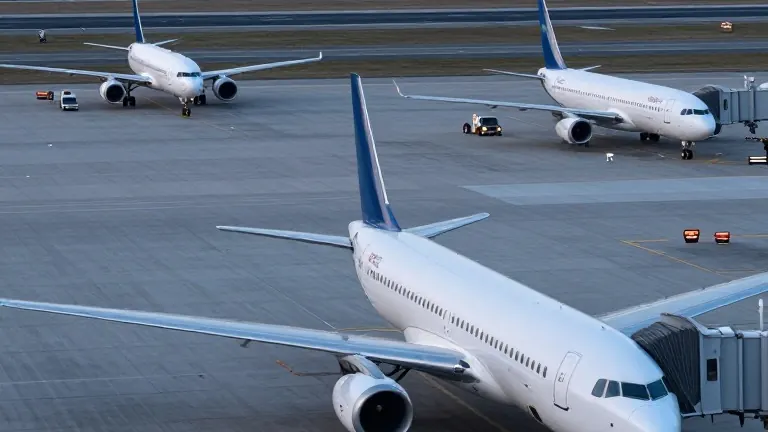
A fresh series of bomb alerts forced the disruption of at least 18 flights across Europe on Friday. All affected planes landed safely, and subsequent searches found no explosive devices. The incidents represent a small fraction of total traffic, accounting for just 0.0674% of the 26,709 flights scheduled in Europe that day, according to air traffic control agency Eurocontrol.
The current round of threats follows separate incidents on Tuesday and Thursday that forced at least 35 flights to be diverted or searched. This sequence of events has raised questions about a coordinated effort to disrupt travel. Danish police investigated a threat against Copenhagen airport, though the facility reported operating normally despite the alert.
On Friday, the disruptions affected specific routes and regions. At least nine flights to and from Prague were impacted, along with four flights over France, two flights to Sofia, and a flight from Lisbon to Rome. Hungarian defense minister Romulusz Ruszin-Szendi stated on Facebook that the country scrambled fighter jets three times to escort civilian flights through its airspace.
The aviation threats occurred alongside a separate spate of alerts targeting media organizations in Ireland. These incidents disrupted broadcasts and led to staff evacuations and police searches of offices. Micheál Martin, the Irish taoiseach, told RTÉ Radio 1 that the threats were an effort to sow fear. He noted, “It shows how relatively simple it can be to cause disruption and undermine the normal operation of society.”
British broadcaster Sky also reported receiving a security threat on Friday and informed the relevant authorities. Earlier in the week, cyber-attacks targeted supermarket refrigeration systems in at least seven European countries. Investigators have found no evidence that a hostile terror group or state actor, such as Russia or Iran, is orchestrating the hoaxes, though inquiries continue.
Some Thursday threats were signed “fighters of the Male State,” a Russian far-right and ultranationalist movement founded in 2016. Several officials suspect the disruption is linked to European support for Ukraine. Spanish foreign minister José Manuel Albares told the national broadcaster TVE that the pattern suggests a coordinated strategy. He said, “The most reasonable assumption is that we are facing an attempt at hybrid aggression and a form of psychological warfare.”
European security agencies are working to identify those responsible and hold them accountable. Authorities have requested more time to determine the culprits behind the series of incidents. The next scheduled step in the investigation involves analyzing the common modus operandi across the different countries and sectors affected.