Aviation expert questions route choice in South Florida Learjet crash
Mike Slack argues the pilots flew a Learjet 60 too close to thunderstorms, noting a safer alternative existed that added only minutes to the flight time.
By Jack Weber ·
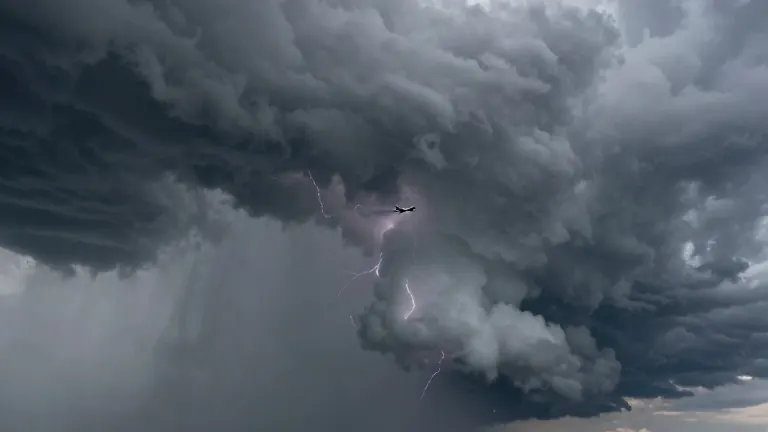
The National Transportation Safety Board is investigating a Learjet 60 that crashed in South Florida on Sunday, leaving key questions unanswered about the causes of the fatal incident. Aviation attorney and pilot Mike Slack, who previously worked for NASA’s Johnson Space Center, has reviewed the flight path and weather data. He believes the crew made a critical error by flying dangerously close to a severe storm system.
Slack stated that the aircraft entered the fringe of a very developed convective weather system before losing control. He noted that an alternative route through Jacksonville would have avoided the storms entirely. That path would have added just minutes to the total flight time, a trade-off he argues was worth taking to avoid the risk.
The pilot questioned why the crew selected the southern route when the weather was already visible on radar before takeoff. He pointed out that the northern route to North Eleuthera presented no weather risk. The six-minute time savings from the chosen path did not justify the exposure to intense atmospheric conditions, according to Slack.
Standard industry practice suggests keeping aircraft at least 30 miles from the edge of intense thunderstorm activity. Slack emphasized that weather conditions are difficult to predict and often overpower mechanical systems. The crew reported light icing and moderate turbulence in radio communications with air traffic control. The outside temperature was recorded at minus 47 degrees Celsius at the time.
Slack believes the storm likely triggered an abrupt stall due to ice buildup or powerful updrafts. The Learjet 60 has a reputation among pilots as a difficult aircraft to manage during a stall. He described the loss of lift as a sudden event that leaves little opportunity for recovery, particularly for a model known for its tendency to stall.
The NTSB has not determined a cause for the crash but says weather remains a major focus of the inquiry. The agency was unable to reach Upper Jets, the operator of the flight, for comment after its email address bounced and voicemail was full. The onscene investigation is ongoing, with the NTSB expected to access the crash site crater on Wednesday.
Slack warned that debris and hazardous materials may be spread over a half-mile radius from the impact zone. He compared the force of the impact to an explosion, noting that fuel, oil, and other compounds are present in the ejecta. Screening the area for hazards could take three to four weeks to complete properly.
The expert noted that the outcome of the crash is clear, but the sequence of events leading up to it remains unknown. He expressed skepticism about the usability of evidence recovered from the crater, suggesting it may be too damaged to provide definitive answers. The investigation continues as officials work to understand why the pilots were in that location with that weather pattern.
More Business · Rip-Off Report · Report a business · Got a Story?