Concussion Research: Saliva Tests Move Toward Sideline Use
LSU scientists are analyzing protein markers in the saliva of football players to create an objective tool for diagnosing head injuries.
By Jack Weber ·
Researchers at LSU, FMOL Health, and the Pennington Biomedical Research Center are working to develop a saliva-based test for concussions. The project aims to identify protein changes in the mouths of injured athletes that signal brain trauma. A practical sideline version is targeted for development within two years.
Guillaume Spielmann, an associate professor in the LSU School of Kinesiology, leads the study. He began the research two years ago using blood samples but switched to saliva because it is easier to collect from players on the field. Spielmann noted that athletes often dislike having blood drawn, making the non-invasive swab method more practical for large-scale data collection.
Current protocols at LSU rely on the C3Logix system and the Sport Concussion Assessment Tool 6. Micki Collins, the sports medicine director for LSU Athletics, explained that these tools track gait, stability, and cognitive responses. While every student athlete has a baseline for comparison, the final decision to return a player to the game remains subjective. Collins said that players often try to hide symptoms, which can put them at risk if the injury is not fully detected.
The new saliva test seeks to add an objective biological marker to this process. Spielmann pointed out that standard questions about fatigue or muscle aches can be confused with the normal effects of intense exercise. By isolating specific proteins, the researchers hope to distinguish between a concussion and general physical exhaustion. This could reduce the likelihood of multiple concussions, which can have long-term impacts on mental and physical health.
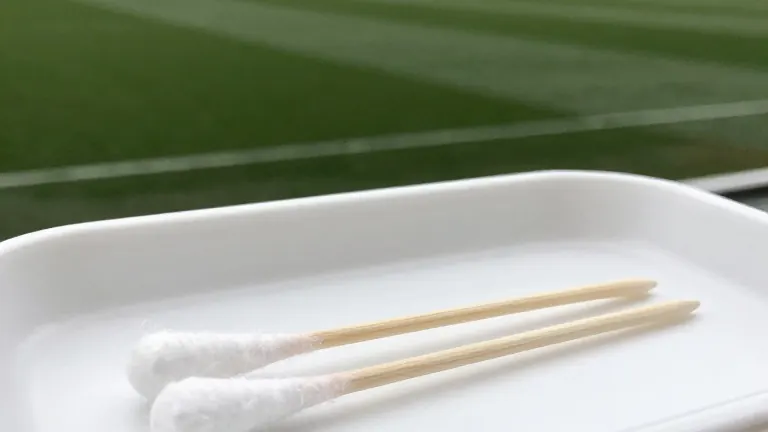
Up to 60 LSU football players will provide samples for the study over the coming months. The procedure involves placing a sterile cotton swab under the tongue for about three minutes. The collected swab is then centrifuged to separate proteins from water and mucus. Spielmann anticipates completing the data collection and analysis by May 2027.
The collaboration between kinesiology, medicine, and biomedicine marks a shift away from siloed scientific approaches. Spielmann argued that traditional concussion evaluation has focused heavily on neurocognitive and biomechanical markers. This interdisciplinary team brings physiologists into the process to examine biological changes. The group plans to expand the findings to other high-risk groups, including first responders and youth athletes.
The next step involves analyzing the protein data to identify specific injury signatures. Once a reliable cluster of proteins is identified, the team will begin designing the sideline device. The goal is to create a tool that fits into the existing medical tent workflow, providing evaluators with a clear biological signal alongside their observational assessments.