Diwali Firecrackers Suffocate 30 Million Delhi Residents in Severe Smog
Firecrackers released during the festival compounded seasonal smog, reducing visibility and straining the lungs of the city's 30 million residents.
By Jack Weber ·
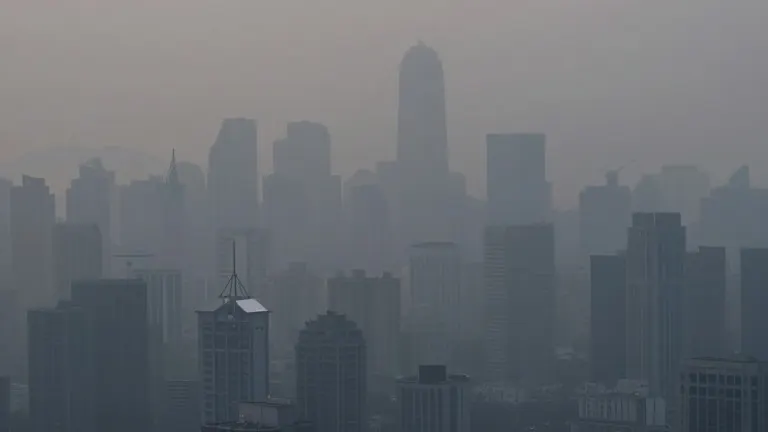
The air quality index in New Delhi surpassed 350 on Monday morning, placing the Indian capital in the severe pollution category. This spike followed Sunday evening's Diwali celebrations, where residents launched firecrackers despite new restrictions. The explosions added smoke and fine particulate matter to an atmosphere already burdened by seasonal haze. Monitoring stations recorded these high levels across the city, causing visibility to drop as a gray blanket covered streets and skyscrapers.
New Delhi and its surrounding metropolitan area are home to more than 30 million people. The region regularly ranks among the most polluted on the planet during the winter months. Pollution peaks when Diwali fireworks coincide with cooler weather and smoke from crop-residue fires in neighboring Punjab and Haryana. Farmers burn leftover rice stalks to clear fields for the next planting season, sending smoke drifting toward the capital. This smoke mixes with emissions from vehicles, industries, and construction dust.
The Supreme Court of India issued an order in October to limit Diwali pollution. The ruling restricted conventional firecrackers and permitted only approved green firecrackers. These approved items could be used for three-hour windows on Saturday and Sunday. While green firecrackers produce fewer emissions, they are not pollution-free. They still release particulate matter that contributes to the city's hazardous air quality.
Isyad, a resident of New Delhi who uses one name, reported physical discomfort from the worsening smog. He stated that the pollution caused throat irritation and itching in his eyes. His symptoms reflect the strain on residents as the annual crisis returns. The problem becomes acute in late October and November. Cooler temperatures, low wind speeds, and stagnant atmospheric conditions prevent pollutants from dispersing, allowing the haze to linger for days.
Local authorities have implemented measures to curb pollution. These include limits on construction activity and restrictions on diesel generators. Courts have also sought to restrict firecrackers. Despite these actions, severe pollution has returned every year. Environmentalists argue that long-term solutions are necessary to stop the annual cycle. They point to the need for cleaner energy and stricter controls on vehicle emissions.
Shweta Narayan, a public health expert at the Global Climate and Health Alliance, criticized the government's approach. She described current interventions as knee-jerk and temporary. Narayan noted that many actions occur only when the government faces pressure to respond. The city currently faces a thick haze that has persisted since Sunday evening.