DOJ Sues to Block Alaska Senate Result if Incumbent Loses
A former Trump chief of staff predicts a wave of legal challenges will follow the midterms, citing the contentious three-way race in Alaska as a precursor.
By Arjun Weber ·
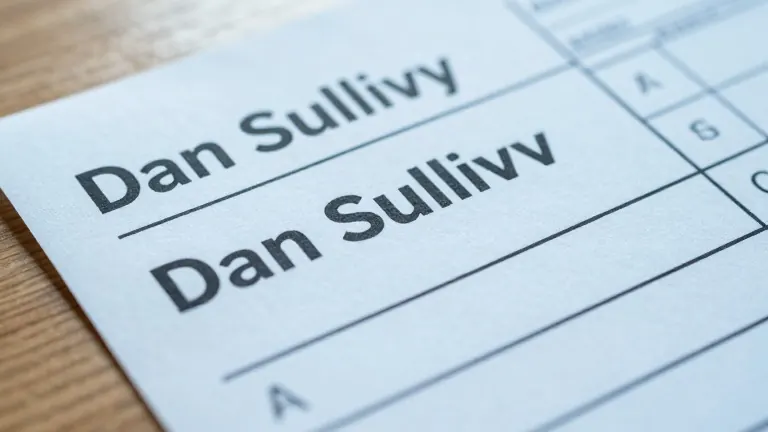
The U.S. Department of Justice has filed a lawsuit arguing that the results of the Alaska Senate race should be blocked if the Republican incumbent loses. The legal action targets a contentious election involving Democrat Mary Peltola and a dark horse candidate, Dan Sullivan, who shares the same first name as the GOP incumbent, also named Dan Sullivan.
Miles Taylor, who served as chief of staff to former Homeland Security Secretary Kirstjen Nielsen, warned on Friday that the Alaska dispute is the opening act of a larger conflict. Taylor said the administration is signaling that it will not accept losses in the ordinary manner. He predicted a flurry of litigation aimed at keeping non-Republican candidates out of power, even if they win at the ballot box.
"I mean, the signal has now been sent," Taylor said. "Folks have worried about this, and they thought maybe there was a chance that this administration was going to just take some losses the way that you would expect them to take losses in any ordinary time." He added that the current situation serves as a bellwether for a messy post-election period, leading to questions about what happens on January 3.
The DOJ suit contends that the presence of the second Dan Sullivan was intended to mislead voters trying to support the GOP incumbent. This argument follows recent reports from The New York Times alleging that Peltola’s campaign recruited the dark horse candidate specifically for his name. Peltola’s campaign and Sullivan have denied the allegations, and a sample of the ballot shows the apparent confusion could be minor.
Legal experts have pushed back on the federal government’s intervention. Lisa Rubin, a senior legal reporter for MS NOW, stated that the dark horse candidate’s eligibility is not under question. She noted that the Alaska Supreme Court already decided that the candidate is allowed on the ballot as a matter of state law and the federal Constitution. The Department of Justice did not seek to intervene in that state-level process, which Rubin argued should have ended the debate.
"The question about whether or not he had bad motive doesn't make this actionable under the National Voter Registration Act, the Supremacy Clause of the Constitution or anything else," Rubin said. She added that whether the candidate had the right motives in getting on the ballot is not for the federal government to decide.
The Alaska Division of Elections initially disqualified the dark horse candidate, arguing his candidacy was not filed in good faith. An Alaska Superior Court judge overturned that decision in June. The Alaska Supreme Court later ordered that the candidate be included on the ballot, a ruling the DOJ is now challenging in federal court.