Spain Rail Survivors Demand Action After 13 Years of Fatal Crashes
Survivors of Spain's three deadliest rail disasters urge increased maintenance spending after 125 people died in accidents this year and 2013.
By Jack Weber ·
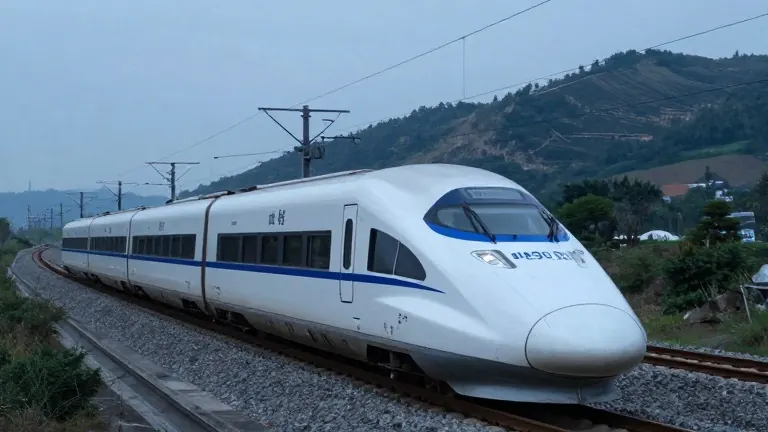
Spain’s high-speed rail network has endured a string of fatal accidents over the last decade, prompting survivors to demand immediate safety reforms. The latest incident occurred near Toledo, adding to a grim toll that includes crashes in 2013, January 2026, and October 2026.
The most recent disaster killed at least 69 people when two trains collided near the town of Urda, close to Toledo in central Spain. This crash marks the third major rail tragedy in the country within a 13-year span. The previous incident on the same line occurred in Adamuz near Cordoba just 10 months earlier, claiming 46 lives. The deadliest accident remains the 2013 crash in Angrois, near Santiago de Compostela, which killed 80 people.
Cristobal Gonzalez, a survivor of the 2013 Angrois crash, highlighted the recurring nature of these disasters. His train, which should have been traveling at 80 kilometers per hour, reached 200 kilometers per hour before it left the tracks. Gonzalez stated that the mental scars from that event persist, and he believes more accidents will occur if Spain does not act.
Gonzalez noted that each crash had a distinct cause. The Angrois accident resulted from excessive speed, while an investigation into the Adamuz crash identified a problem on the track. The recent Urda collision may have involved human error and a failure in the control system. He argued that increased investment in safety is necessary to stop these crashes, regardless of the specific technical faults.
Santiago Rosendo, a passenger on the Adamuz crash in January, described the sudden stop and loud crash that followed. He recalled the train sliding onto its side, leaving passengers in darkness. Rosendo expressed disbelief that another crash had occurred on the same line, emphasizing the need for systemic change. He was traveling from Madrid to Huelva when the accident happened on a Sunday night.
Data from the European Commission reveals a disparity in how Spain spends its rail budget compared to other European nations. Between 2018 and 2022, Spain spent an average of $1.67 billion annually on high-speed lines. However, only 16 percent of that amount went to maintenance or repairs. In contrast, Italy, Germany, and France allocated between 33 and 39 percent of their budgets to maintenance, despite having smaller networks than Spain's 4,000-kilometer system.
Jose Maria Goicolea, a spokesman for the Spanish Association of Civil Engineers, pointed out that the network has grown significantly in size and usage since the first line opened in 1982. He argued that the focus must shift from building new lines to maintaining existing infrastructure. Goicolea suggested closing the Madrid-Seville line while the outdated German-made LZB control system, dating from the 1970s, is phased out.
The Madrid-Seville line is the only one in Spain using this 1970s-era control system, which is currently being retired. Goicolea stated that the system failed during Wednesday's crash, though human error also played a role. Ramiro Aupin Lopera, an infrastructure expert, criticized the decline in maintenance investment since the 2011 financial crisis. He noted that passenger numbers have almost doubled since 2019, reaching about 40 million in 2024, while maintenance spending has fallen.
Private operators have also raised concerns about the aging technology. Helen Venezuela, formerly of Ouigo Espana, compared the obsolete LZB system to watching a modern service in black and white. Diego Martin of the Spanish train drivers' union SEMAF warned against blaming rail workers for the latest disaster. He emphasized that identifying and determining causes is more effective than assigning blame in preventing future accidents.