Spanish Transport Minister Blames Human Error in Toledo Train Crash
Unions argue that staffing shortages and aging safety systems contributed to the collision that killed 69 people on the Madrid to Sevilla line.
By Alexei Brooks ·
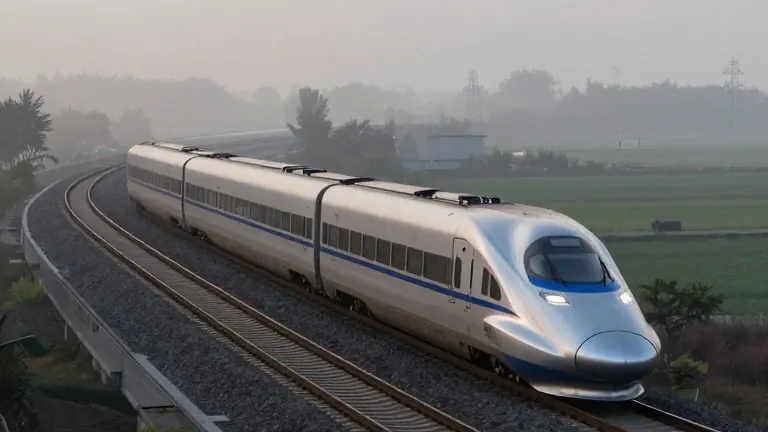
Spanish Transport Minister Oscar Puente attributed the majority of the blame for the fatal train collision in Toledo province on Wednesday to the judgment of a traffic controller. The crash killed 69 people and derailed both trains involved. Puente described the decision to allow one train to resume full speed while another remained stopped as inexplicable and erroneous. He noted that a red signal was still active on the line at the time of the instruction.
Railway unions reject that explanation. They argue that deteriorating working conditions and a lack of staff created a high risk of error. Raquel Ayllon, spokesperson for the SCF union of railway traffic controllers, stated that the minister is blaming a worker operating under increasingly poor conditions. She added that human error is not incomprehensible, but the regular failure of the safety system is.
The incident occurred on the Madrid to Sevilla high-speed line, the second major accident on that route this year. In January, a train left the tracks and collided with another traveling in the opposite direction, killing 46 people. Spain possesses the second largest high-speed rail network in the world, behind only China. The system had not suffered a fatal accident in more than three decades of operation until this year.
Government officials outline a specific sequence of events leading to the crash. At 8:30 a.m. on Wednesday, the LZB communications system failed. This system monitors train positions and can trigger automatic braking. The failure forced human controllers in Madrid to monitor all train movements on a 63 kilometer stretch of track. Authorities believe six trains were on that section at the time.
At 8:36 a.m., a controller told a state-run RENFE train to return to normal speed. An IRYO train, 25 kilometers ahead, attempted to restart but the driver could not cancel the automatic stop. The driver reported the issue to the controller. At 8:53 a.m., the two trains collided. Initial findings from independent investigators indicate the RENFE train was traveling between 160 and 200 kilometers per hour at the moment of impact.
Investigations continue as police with tracking dogs combed through the wreckage on Friday morning. Special committee investigators removed the black boxes from the trains late Thursday and handed them to the Civil Guard. King Felipe VI visited injured passengers in a Toledo hospital on Thursday. He stated the investigation must determine how and why the catastrophe happened and what measures are needed to prevent a repeat.
Union representatives also criticized the leak of audio fragments from the control room to media outlets. The recordings show frantic conversations between drivers and controllers in the minutes before the crash. Railway workers joined a pre-scheduled strike on Thursday to demand the government meet its commitments to improve safety conditions after the January accident. Diego Martin, spokesperson for the SEMAF drivers union, said the 30 year old LZB system should have been replaced long ago.
Spain opened its high-speed rail to private operators in 2021, ending a monopoly by the state. Both accidents this year involved a RENFE train and an IRYO train. Traffic on the network increased after the market opened. The SCF union reported that the average number of daily trips between Madrid and Barcelona rose from 56 to 89 between 2019 and 2024. Joan Rodriguez, a union spokesperson, said the increased traffic from privatization added pressure to the system.