Spain's Rail System Faces Scrutiny After Madrid-Seville Collision Kills 68
A high-speed train crashed into a stationary locomotive Wednesday, reigniting debates about maintenance costs and safety protocols ahead of next month's general election.
By Jack Weber ·
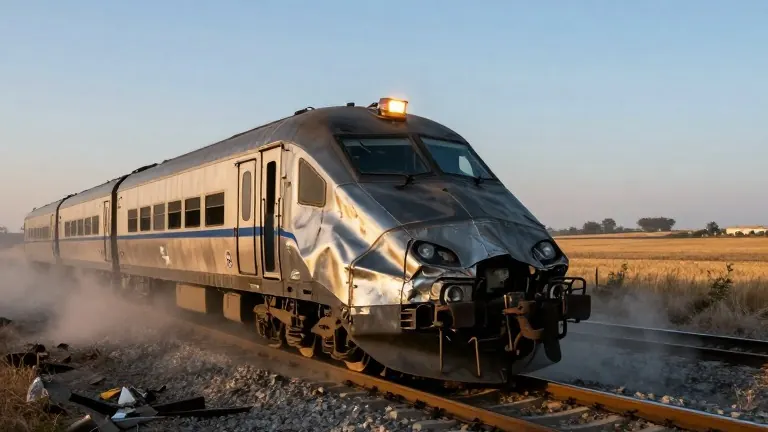
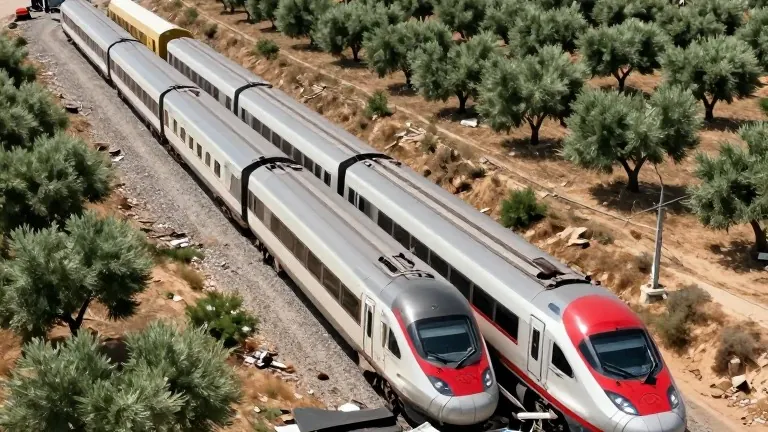
The collision between a moving Renfe high-speed train and a stationary Iryo locomotive killed at least 68 people and injured 77 others on Wednesday morning. The crash occurred just before 9 a.m. in a rural stretch between Urda and Los Yebenes, south of Toledo. For the roughly 500 passengers aboard, the journey from Madrid to Seville ended in sudden metal and glass. Survivors described a scene of twisted carriages and scattered debris as rescuers pulled bodies from the wreckage.
This disaster marks the second major rail catastrophe on Spanish tracks in nine months. In January, a train derailed near Adamuz, killing 46 people. That incident triggered a preliminary investigation that identified a rail fracture as the cause, though police have not yet concluded their review. The recurrence of such a severe accident within a single year has intensified public anxiety regarding the reliability of the country's extensive high-speed network.
The sequence of events leading to the Wednesday crash centers on a communication failure. Spanish Transport Minister Oscar Puente stated that a computer error triggered an active red signal, halting traffic due to the stationary Iryo train ahead. Despite this signal, the central command center issued an order for the Renfe train to continue. Puente described this authorization as "inexplicable" and stated that the engineers driving the train were not to blame for the resulting impact.
Political consequences are already emerging as the country prepares for a general election on November 29. Prime Minister Pedro Sanchez declared three days of national mourning. He criticized the timing of the second disaster, noting that it is not acceptable for Spain to experience two major train accidents in one year. Opposition leader Alberto Nunez Feijoo demanded a complete and independent review of the entire rail network, questioning the condition of the tracks and the safety systems in place.
The economic structure of Spain's rail maintenance provides context for these safety concerns. European Commission data indicates that while Spain spent an average of $1.67 billion annually on high-speed lines between 2018 and 2022, only 16 percent of that budget went toward maintenance or repairs. In contrast, Italy, Germany, and France allocated between 33 and 39 percent of their similar budgets to maintenance, despite operating smaller networks. Spain's high-speed network spans 4,000 kilometers, a distance that requires substantial upkeep to ensure safety.
Accident statistics reflect a rising trend in risks. The Spanish railway safety authority reported that rail accidents, including collisions and derailments, increased from 45 in 2016 to 57 in 2024. The figure surged to 69 in 2025. While passenger numbers reached 40 million in 2024, usage dropped by 14 percent in the first half of this year compared to the previous period. This shift in ridership occurs as the government faces pressure to explain its infrastructure spending priorities.
A judicial investigation into the Wednesday crash is expected to begin shortly. In the interim, the trade union Solidarity held a demonstration in Madrid on Wednesday night to demand the resignation of Transport Minister Puente. Rail unions had also scheduled a strike for Thursday to protest the network's safety record. As the investigation proceeds, officials must reconcile the rapid expansion of the rail system with the resources dedicated to its ongoing maintenance.