Ad spend reveals 70 key House races in final week
Both parties are pouring millions into specific districts, with the most expensive fights concentrated in Michigan, North Carolina, Florida, and New York.
By Arjun Weber ·
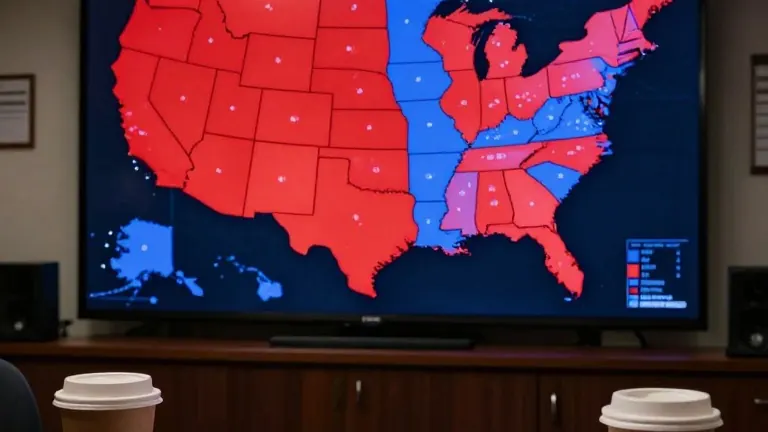
The final week of the 2026 midterm election is defined by a shift in strategy for both major parties. The core question is no longer whether Democrats can stop a Republican wave, but how high the Democratic tide will rise in the House of Representatives.
An analysis of advertising data shows a wide field of competitive races. Seventy districts have received at least six figures in spending from both parties in the final days of the campaign. This expansive list of contests indicates a much wider battleground than previous cycles.
The highest spending is occurring in specific toss-up districts. Michigan, North Carolina, New York, and Florida are each seeing more than $10 million in ad buys. The most expensive races are Michigan's 7th District and North Carolina's 1st District, with over $12 million planned for each. Florida's 14th, 22nd, and 25th Districts, along with New York's 17th, also rank at the top of the spending lists.
Republicans are reducing their advertising in several districts that voted for a Democratic presidential candidate in 2024. This includes races in California, New Jersey, Washington, and Nebraska. Current ratings from the Cook Political Report show Democrats favored in 220 seats. The report lists 17 races as toss-ups and 30 as competitive but leaning Republican.
Recent redistricting has complicated the map for incumbents. Republicans shifted boundary lines in states like Ohio, North Carolina, Alabama, and Florida to add conservative voters to districts held by Democrats. In California, Democrats did the same in districts held by Republicans. Only two of the four Democratic representatives in these redrawn districts, Shomari Figures and Darren Soto, are in seats currently rated as favoring Republicans.
Voter sentiment is driven by economic concerns. A recent poll finds Democrats have a 10-point advantage among registered voters on the generic congressional ballot. The top issue for voters is the cost of living, influenced by rising gas prices, tariffs, and the ongoing war in Iran. A record number of congressional retirement announcements has also fueled anti-incumbency sentiment in primary elections.
The 70 districts with heavy spending from both sides voted for Donald Trump by an average of nine points in 2024. Sixty of these districts are listed as priorities by both the Democratic and Republican House campaign arms. This overlap highlights the impact of the current administration's unpopularity with voters over the last year.
Not every contested race will be close. Many districts identified by the Democratic Congressional Campaign Committee as 'in play' gave Trump nearly 60 percent of the vote in 2024. These areas have seen little to no advertising from either party in the final stretch.