Bexar County dementia rate drives $200,000 study into baboon brains
Trinity University researchers will test cognitive tasks on primates to identify molecular markers of Alzheimer's that appear decades before human symptoms.
By Jack Weber ·
The rate of Alzheimer's disease and related dementias in Bexar County sits at 13% for residents over the age of 65, a figure that exceeds the national average of 12% according to the Alzheimer's Association. That local data point anchors a new $200,000 grant awarded to Trinity University by the San Antonio Medical Foundation. The funding, secured by psychology professor and neuroscience director Kimberley Phillips, Ph.D., begins its work this month with a focus on detecting brain changes before clinical symptoms emerge.
Phillips stated from her office in the Center for the Sciences and Innovation that the grant provides a real opportunity to move theoretical ideas into the lab. "Oh my gosh, yes. So excited," she said regarding the new support. The project is a proof-of-concept study designed to observe molecular changes in the brain that occur prior to any visible decline. Phillips noted that brain changes appear 10 to 20 years before symptoms manifest in humans. Identifying these early shifts could allow for earlier intervention, potentially changing or delaying the progression of the disease.
Current treatments for Alzheimer's remain limited with no existing cure. Phillips identified lifestyle modifications, such as adopting the Mediterranean diet, exercising, and maintaining strong social networks, as the most effective non-pharmacological tools for delaying symptoms. The research aims to provide a biological basis for earlier diagnosis rather than relying solely on behavioral observation.
The study will take place at the Southwest National Primate Research Center at the Texas Biomedical Research Institute. Phillips is collaborating with Eric Vallender, Ph.D., associate director of research at Texas Biomed, and Adam Salmon, Ph.D., associate director of the Sam and Ann Barshop Institute for Longevity and Aging Studies at UT Health San Antonio. Corinna Ross, Ph.D., director of the primate center, is also a key collaborator. The team selected baboons as subjects because the animals share close neurological, biological, and genetic traits with humans. They age and exhibit neurodegenerative cognitive decline in patterns similar to those seen in people.
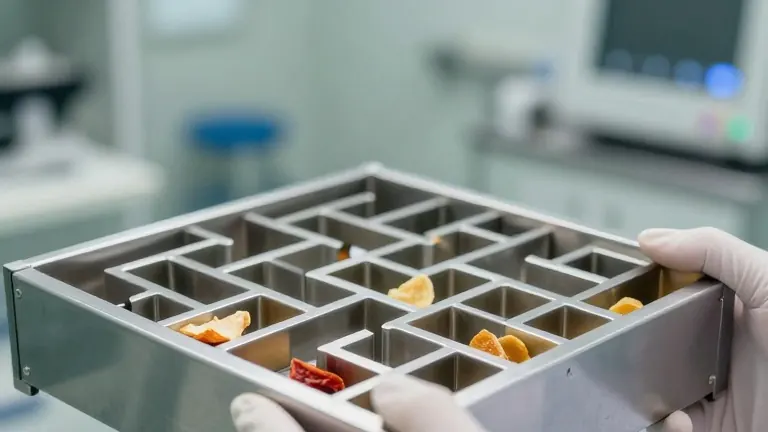
The experimental method involves using a toy maze with multiple configurations to measure cognitive function. Researchers will place a piece of dried fruit in one compartment of the maze and hand the tool to the baboon. The animal must manipulate the device to retrieve the treat. The team records the number of challenges completed and the time required for each task. By comparing the performance of older baboons against younger peers, scientists can track changes in ability over time. Phillips described the process as engaging for the animals, noting that the baboons view the maze as a puzzle and enjoy the tasty reward.
The research will include real-time analysis of molecular, cognitive, and biomarker changes. Phillips' lab, which welcomed new students this fall, will integrate undergraduate students into the project. A couple of Trinity psychology and neuroscience undergraduates will likely assist with the cognitive testing of the baboons this month. Phillips stated that the project has the potential to be transformative in establishing early detection tools for humans. The data collected will also serve as a foundation for larger grant applications to the National Institutes of Health and other agencies, demonstrating the team's capacity to conduct this specific type of work.
The initial phase of the study focuses on gathering baseline data from the primate subjects. Phillips emphasized that earlier detection offers the best chance to intervene before the disease becomes symptomatic. The collaboration between Trinity, Texas Biomed, and UT Health San Antonio allows for a multi-faceted approach to understanding neurodegeneration. The grant supports the specific logistical and scientific costs required to run the cognitive tasks and analyze the resulting molecular data.