Fort Worth: $270M TEXRail expansion breaks ground
The 2.1-mile extension to the medical district will link 50,000 jobs to the existing line serving DFW Airport.
By Alexei Brooks ·
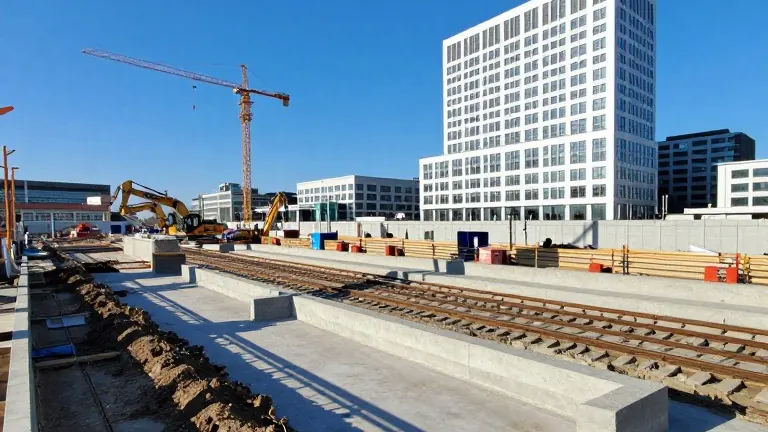
$270 million. That is the price tag for a 2.1-mile extension of Fort Worth’s TEXRail passenger rail line, a project that officials on Thursday said grew out of a casual beer conversation four years ago. Trinity Metro President and CEO Rich Andreski told the crowd at the groundbreaking ceremony that the idea emerged during a chat with Michael Morris, the transportation director for North Texas.
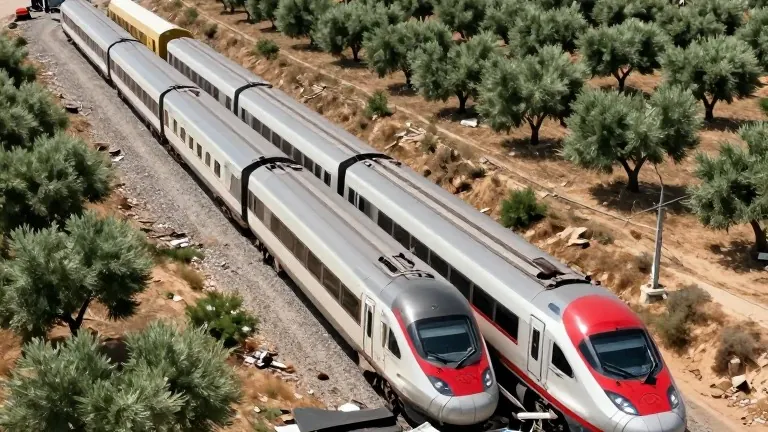
The new segment will connect the existing 27.2-mile line, which currently runs from downtown Fort Worth to Dallas Fort Worth International Airport, to the Near Southside Medical District. When finished, the rail service will provide direct access to 50,000 jobs in that area. City, federal, and healthcare leaders gathered for the ceremony at the future site of the Near Southside/Medical District Station, located next to Baylor Scott & White All Saints Medical Center, Fort Worth.
The station will be constructed on 1.76 acres at the intersection of Luther Lane and Mistletoe Drive. The land was donated by the Dallas-based Baylor Scott & White Health hospital system. Trinity Metro secured property rights for infrastructure improvements through a 35-year ground lease. A separate passenger track will be built on a portion of the Fort Worth & Western Railroad Co.’s freight line. A $6.1 million agreement with the railroad allows Trinity Metro to build and operate the service from the T&P Station downtown.
Andreski, who commutes daily from northeast Tarrant County to downtown, stated that the extension will improve access to healthcare, education, and employment. He cited internal data showing that every dollar invested in Trinity Metro returns $3.05 to the local economy. "For a patient without a car or a senior who no longer drives, it means getting to care on time and getting home with dignity," he said.
Fort Worth Mayor Mattie Parker noted that her relationship with Trinity Metro was strained when she took office in 2021. She said the city has since moved to work closely with the transit agency. "There were more times than I can count along the way that we were worried that we could not make this project work," Parker said. She credited U.S. Rep. Roger Williams, R-Willow Park, for helping secure a $25 million grant from the U.S. Department of Transportation. Parker also pointed to the mobility innovation zone at Alliance as a sign of the city's evolving transportation focus.
Council member Elizabeth Beck said neighborhood groups in her district collaborated with Trinity Metro on the design. She acknowledged the role of Denton County Judge Andy Eads, who serves on the Regional Transportation Council, in securing final federal funding. Beck described the project as opening Fort Worth to the world by connecting the airport directly to the heart of the medical district.
Plans call for the passenger line to eventually extend south to TCU and along the Chisholm Trail Parkway to the Tarleton State University campus in southwest Fort Worth. Rep. Williams, who described himself as a car enthusiast, said the extension will create jobs as more people move to Fort Worth. Charles Williams, president of Baylor Scott & White DFW, said the hospital is proud to host the first TEXRail stop in the Medical District.
Michael Morris, who leads the Regional Transportation Council, stated that his funding decisions look 20 years into the future. He predicted North Texas will reach a population of 12 million people. Gail Lyssy, the Region 6 regional administrator for the Federal Transit Administration, noted that her agency supplied $499 million to launch TEXRail in 2019. She said the system has served almost 5 million riders since its launch and expects the new extension to help Trinity Metro reach 10 million riders.
The project is funded by a mix of federal and local sources. These include the Congestion Mitigation and Air Quality Improvement Program, the Surface Transportation Block Grant Program, and the Better Utilizing Investments to Leverage Development program. Funds also come from the Coronavirus Response and Relief Supplemental Appropriations Act and savings from the original TEXRail project. Jeff Davis, chairman of the Trinity Metro board, said the project demonstrates that transit is the answer to urban mobility challenges.