Seven cafés closed in Iran over religious rule breaches
Police and prosecutors in Gilan and South Khorasan provinces sealed four businesses in Fuman and three in Birjand, citing complaints about public decency.
By Jack Weber ·
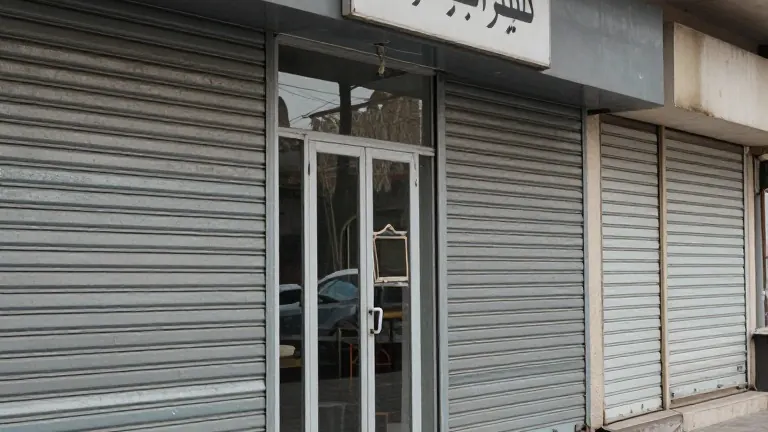
Seven dining establishments in Iran were sealed on Sunday across two provinces. Police and prosecutors cited alleged violations of Islamic norms as the reason for the closures. The actions took place in Gilan and South Khorasan provinces.
In the city of Fuman, located in Gilan province, authorities closed four café-restaurants. Hossein Ashouri, the local police chief, told the semi-official Mehr News Agency that managers of these businesses were referred to judicial authorities. He did not specify the exact infractions that led to the seizures.
Similar closures have occurred in the past for reasons including mixed seating for men and women, female patrons not wearing head coverings, and the playing of music. These precedents suggest the types of behaviors that may have triggered the recent actions in Fuman.
The legal advocacy network Dadbaan challenged the closures. The group argued that the actions infringe on citizens' rights to employment. They pointed to Article 28 of the Constitution, which guarantees the right to work. The network stated that any restriction on this right must be based on specific laws.
Dadbaan also referenced the Law on the Guild System. The network argued that a business can only be closed after a specific violation is identified and legal procedures are followed. They maintained that a general reference to Islamic norms is not enough to stop economic activity without legal precision.
In South Khorasan province, prosecutor-general Ahmad Ghasemi announced that three cafés in Birjand were sealed. Tasnim News Agency, which is affiliated with the Islamic Revolution Guard Corps, reported the news. Ghasemi said the closures followed public complaints about failures to observe Islamic principles and regulations on public decency.
Ghasemi stated that legal action would be taken against the businesses in Birjand. He described protecting public rights and preserving legal values as core duties of authorities. He added that violations would be handled without leniency and that establishments disregarding laws would be closed to ensure compliance with societal norms.