White House: Iran conflict effectively over militarily, but naval blockade remains
President Trump states he is maintaining the status quo after losing control of Congress to Democrats who opposed the war.
By Alexei Brooks ·
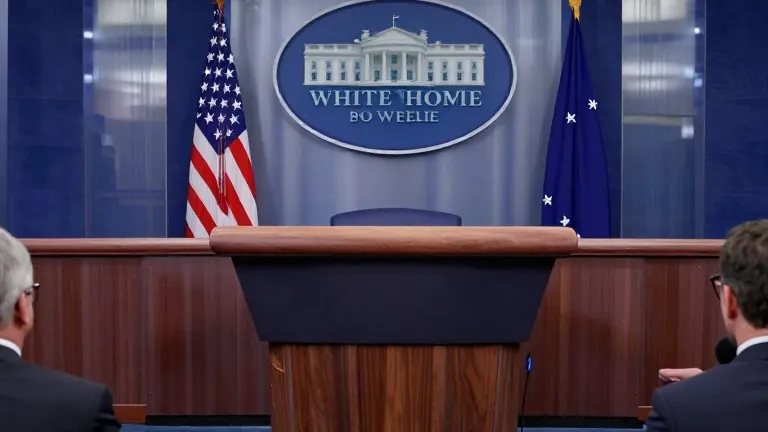
President Donald Trump told reporters on Monday that the military conflict with Iran is effectively over, signaling that the United States is not preparing to resume full-scale bombing. The President made the remarks during an unannounced visit to the White House news room following a meeting with Qatari Prime Minister Sheikh Mohammed bin Abdulrahman bin Jassim Al Thani. Trump described the current state of affairs as a maintained status quo rather than an active escalation.
"Iran is, militarily, finished in practice," Trump said. "We're just maintaining the status quo." He added that Iran has been decapitated but that the administration seeks a long-term solution to neutralize the country's nuclear program. These comments mark the President's most definitive shift away from his previous threats to restart attacks after the midterm elections.
The political context for this shift is the loss of the Republican majority in both chambers of Congress to the Democrats in last week's election. Voter discontent over the war, which began eight months ago with Israel, fueled the results. The conflict has driven up fuel prices and affected sectors of the global economy. Trump has previously reversed course multiple times, threatening intensified strikes before opting for diplomacy at the last minute.
Qatari officials presented proposals regarding Iran's nuclear program last week, according to two Middle Eastern government officials who spoke on condition of anonymity. The White House declined to comment, though Trump referenced indirect talks with Tehran last week. In a social media post before his press conference, Trump said regional allies including Qatar, Saudi Arabia, the UAE, Bahrain, and Kuwait prefer the status quo. He described a positive impulse and a good possibility that the war could end.
"They're talking to us, and they're talking very politely, and we'll see what happens," Trump said. "Military action doesn't seem to be very necessary, but we are ready and prepared, ready to act for any reason that changes." He did not indicate that the thousands of U.S. troops maintaining a naval blockade to stop Iranian oil exports would be withdrawn. "We're keeping it. We have the biggest military blockade in history," he noted.
Defense Secretary Pete Hegseth said the next steps depend on Trump, including the possibility of telling Iran to monitor its nuclear material. Hegseth, a prominent advocate of the war, faces criticism over the conflict's authorization. Republican Representative Thomas Massie initiated a process on Monday to force a vote to impeach Hegseth largely over his war execution.
Iran continues to demand concessions before nuclear talks, including ending the U.S. blockade of its ports, lifting sanctions, unfreezing assets, war compensation, and ending hostilities in the region, including Israeli operations in Lebanon. Trump told CNN on Sunday that if progress is made and a solid agreement is signed, it is very unlikely that attacks will resume. He noted the U.S. has identified 38 bridges and other infrastructure targets for potential strikes. The U.S. military conducted limited strikes on Iranian air defenses twice in the last week and disabled a commercial ship Saturday that attempted to break the blockade.
image_prompt