Trump rallies in Iowa and Kansas as Senate races tighten
Democrat Abdul El-Sayed faces a primary rival's endorsement of his Republican opponent in Michigan, complicating the party's bid to retake the Senate.
By Alexei Brooks ·
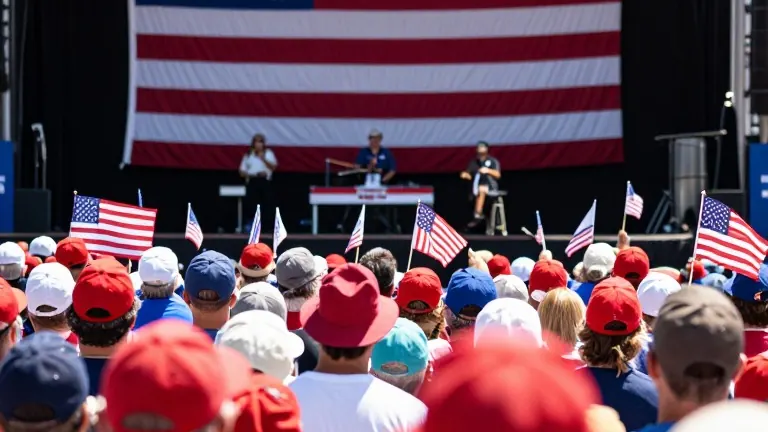
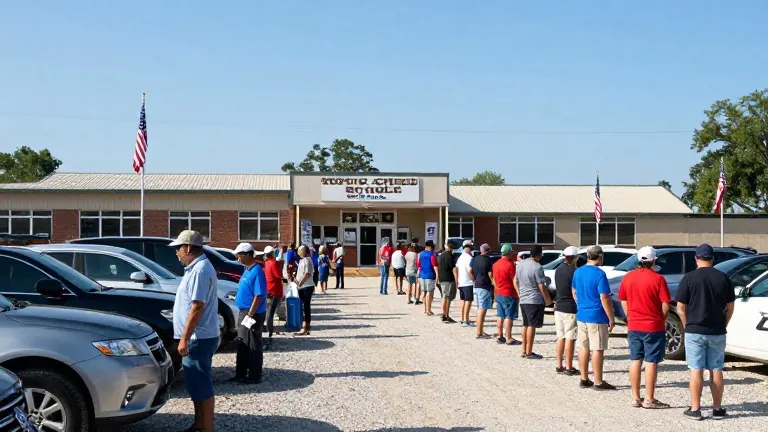
President Donald Trump campaigned in Iowa and Kansas on Sunday, urging Republicans to hold both chambers of Congress while Democrats grappled with internal conflict in Michigan. The midterm elections on Tuesday have become a direct test of the president's second term, with more than 54 million votes already cast in early voting.
In Dubuque, Iowa, Trump spoke for two hours before heading to Salina, Kansas. He told the crowd that Republicans were poised for sweeping wins. "We're going to elect 'America first' Republicans up and down the line," he said. His focus on these states marks a shift from his 2024 strategy of flipping Democratic strongholds. This year, he is targeting states he has previously dominated, where voters are questioning the economic impact of his tariffs and the war in Iran.
The campaign's defensive tone was underscored by events in Michigan, a critical state for Democratic Senate control. Rep. Haley Stevens, who lost the Democratic primary to Abdul El-Sayed, publicly endorsed her Republican opponent, Mike Rogers. Stevens cited a snub from El-Sayed's campaign as the reason for her switch. "Our Democratic nominee for Senate said I was no longer welcome in his campaign and that I should stay away," Stevens said in a video announcement. "And he's right. And that's why I am endorsing Mike Rogers for the United States Senate today."
Democratic leaders moved quickly to contain the split. Sen. Chuck Schumer of New York stated the party remained "united in our support" of El-Sayed. Sen. Kirsten Gillibrand of New York, the chair of the Democratic Senatorial Campaign Committee, said the party would "stand firmly" behind the nominee and "reject any efforts to divide Democrats." Sen. Bernie Sanders of Vermont, a key supporter of El-Sayed, dismissed the controversy on CBS' "Face the Nation," noting that Stevens lost a close primary but that voters were standing with El-Sayed.
If Democrats lose Michigan, they face steep challenges in winning seats in Texas, Kansas, Ohio, or Iowa. In Iowa, outgoing Rep. Don Bacon of Nebraska warned on CNN that tariffs could hurt the party. "Tariffs are not popular here in the Midwest," Bacon said. "I tried telling the president that." He predicted a debate within the Republican Party if they suffer major losses.
Sen. Tim Scott of South Carolina, the chair of the National Republican Senatorial Committee, expressed confidence on NBC's "Meet the Press" that Republicans would keep the Senate. He emphasized that the election is centered on the president's agenda. "There's no doubt that President Trump has said himself that the midterm election is about him," Scott said. "His agenda, without any question, is on the ballot."
Trump paused his rally schedule on Saturday for a Halloween party at Mar-a-Lago, where he told guests the country had "never done better." He returns to the campaign trail in the final days before Tuesday's vote, relying on high-energy appearances to counter concerns about inflation and foreign policy.