Breaking: Congress Sweep and Data Center Moratoriums Trigger Market Rout
Democratic victories in key states and ballot measures against AI infrastructure drove the Nasdaq into correction territory as investors reassessed the pace of the technology buildout.
By Alexei Brooks ·
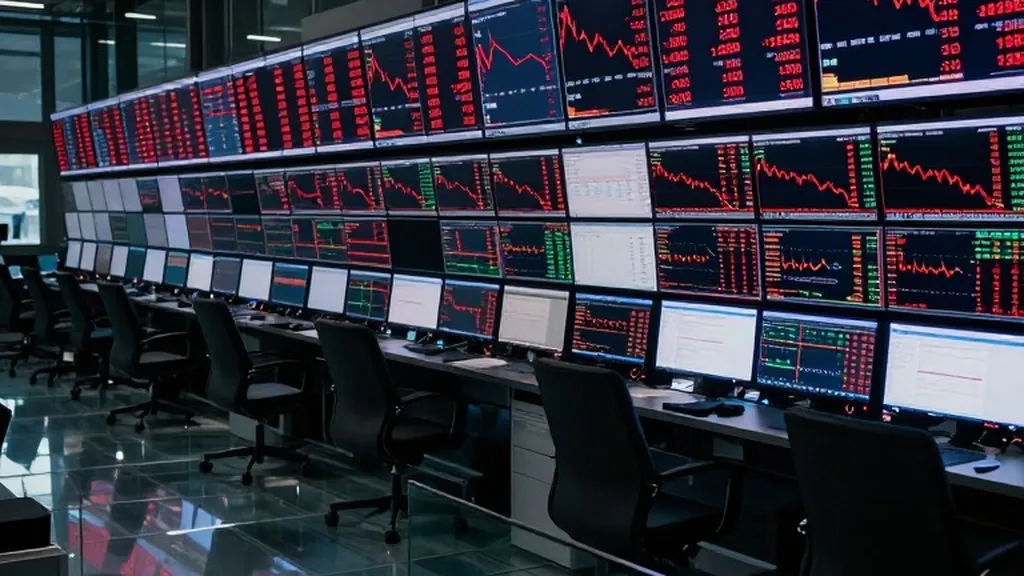
The U.S. stock market experienced a sharp decline on Thursday as investors reacted to the Democratic sweep of Congress and a series of state level victories that signal growing political resistance to the rapid expansion of data centers. The S&P 500 fell 4.3 percent, marking its worst day since April 2025, while the Nasdaq Composite dropped 5.5 percent to enter correction territory. The Dow Jones Industrial Average lost more than 1,800 points, a decline of 3.4 percent, erasing the gains made the previous day when Wall Street had seen its biggest daily gain in months.
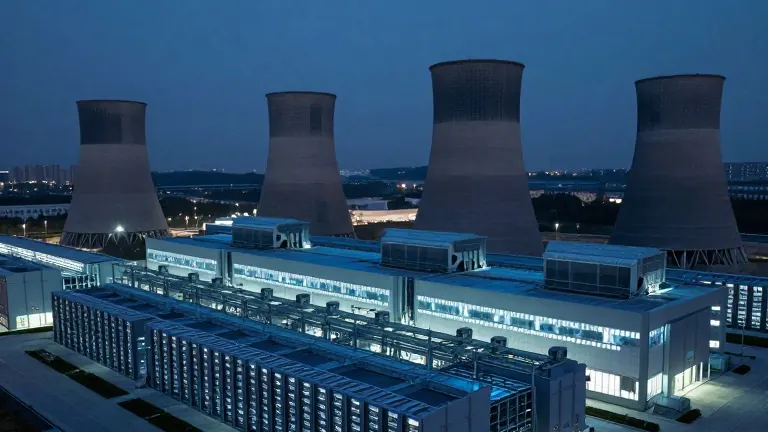
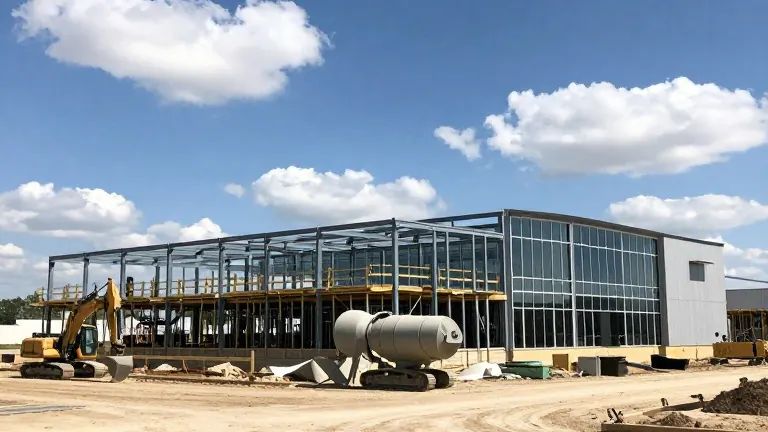
The primary driver of the selling was the outcome of Tuesday's midterm elections, where Democrats secured control of both the House and the Senate. Beyond the federal chambers, voters in numerous states rejected ballot measures aimed at restricting data center development. This political shift has intensified concerns that the infrastructure underpinning the artificial intelligence boom will face new regulatory hurdles and construction delays, directly impacting the valuation of major technology firms.
Texas played a pivotal role in the market's reaction. Democrat Gina Hinojosa won the gubernatorial race after campaigning on an immediate moratorium on new data center construction. Her victory, along with Democratic wins in other states with large concentrations of planned facilities such as Ohio, heightened fears among investors that state level restrictions could slow the physical buildout of AI infrastructure. This development adds to broader anxieties that the enormous sums spent on AI may not yield the expected returns, leading some analysts to question whether AI shares are in a bubble.
Technology and semiconductor stocks led the rout. Nvidia, the largest component of the Dow, fell 9.2 percent, losing more than $400 billion in market value. The Philadelphia Semiconductor Index dropped more than 12 percent, its worst day since March 2020. The index has now fallen more than 30 percent since the beginning of October and stands almost 40 percent below its peak in June. Other major tech names including Tesla and SpaceX also saw significant declines, taking more than $300 billion off the value of Elon Musk's companies despite his substantial financial support for Republican campaigns in Texas.
Market volatility spiked as investors sought safety. The Cboe Volatility Index, often viewed as a fear gauge, jumped as much as 5.7 points to above 28, its highest reading since March 31, 2026. By midday, nearly 800,000 VIX call options had traded, a volume 3.5 times the 30 day average. Simultaneously, the 10 year Treasury yield fell to 4.83 percent, its lowest since September, as capital flowed into bonds as a haven. In London, the FTSE 100 closed down 0.4 percent after an early rally in Europe faded.
Neil Wilson, an investor strategist at Saxo UK, described the event as a complete capitulation level event in tech stocks. He noted that the fear is a total momentum unwind as Democrats pace the frontier and potentially halt the data center buildout. Wilson added that while the move looks totally overdone, the nature of sell everything dynamics in this market means traders need to look for some stability first. He emphasized that the political shift creates a significant headwind for the AI trade.
Dan Ives, a tech analyst, stated that there is no way to sugarcoat the fact that Democrats taking control, especially over the Senate, will create major hurdles for AI and tech legislation in the Beltway over the next two years. He viewed the midterm results as a clear sign that the pace of data center buildout will start to slow. This perspective aligns with the view that the market is moving from the promise of AI to the price of AI, suggesting that not every AI related stock is currently priced appropriately.
Susannah Streeter, chief investment strategist at Wealth Club, observed that fresh panic over the AI trade has hit Wall Street hard. She explained that fears that the vast sums poured into AI infrastructure may not deliver the returns investors have been banking on are now colliding with the prospect of a sharp slowdown in data center construction. This collision of valuation concerns and political risk has created a turbulent environment for equity markets.
Historical data offers a mixed outlook for recovery. Frank Cappelleri, founder of CappThesis, noted that the Nasdaq was higher 12 months after the election in all but one of 13 midterm cycles since 1974, though the path can be volatile. However, a review of 10 Nasdaq corrections over the last decade showed that sell offs in 2025, 2022, 2020, and 2018 were followed by further rough selling over the next month. While the Nasdaq was back in rally mode six months later in every case except 2022, the January 2022 correction was an exception where the index lost another 18.3 percent over the next six months.
Industry leaders are acknowledging the need for better community engagement. Greg Brockman, president and co founder of OpenAI, said everyone had been surprised by the reaction to data centers and that more work was needed to bring communities on board. He emphasized that from San Francisco trying to build infrastructure in Texas, Georgia, and other places, you can't just tweet and say this is going to be good. He stated that the industry needs to be in those communities. Dina Powell McCormick, president of Meta, agreed, telling the same conference that the industry needs to double and triple down on telling the story to make the case for AI.
More Business · Rip-Off Report · Report a business · Got a Story?