Record $850M spent as Democrats claim historic sweep despite GOP edge
The 2026 midterms saw record spending and a massive Democratic victory, with Republicans retaining a slight financial advantage in overall fundraising.
By Arjun Weber ·

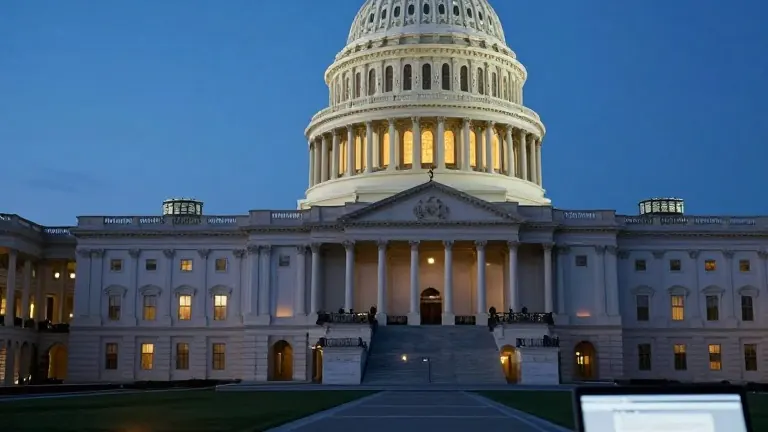
The 2026 midterm elections have concluded as the most expensive in American history, with total spending reaching approximately 850 million dollars across key federal races. This financial surge did not prevent a historic shift in power, as Democrats captured control of both chambers of Congress in a sweeping victory that has fundamentally reshaped the balance of power in Washington.
According to data and reporting, the Democratic Party emerged as the clear winner of the election. In the U.S. House of Representatives, Democrats secured 233 seats compared to 138 for Republicans, as of late updates on November 4. This result gives Democrats a net gain of 30 seats, a margin far exceeding the three seats they needed to claim the majority. The Associated Press noted that this surge was fueled by voter dissatisfaction with the incumbent administration and economic concerns.
In the U.S. Senate, Democrats also secured a decisive victory. As of 9:05 AM ET on November 4, Democrats had won 20 of the 35 seats up for election, while Republicans claimed 13. Two seats remained uncalled, but Decision Desk HQ projected a Democratic majority by late Tuesday night. This outcome marks a net gain of seven seats for the Democrats, who needed to gain at least four seats to take control of the chamber. The Associated Press reported that seven seats changed party hands, all moving from Republican to Democratic control.
Despite the financial outlay, the distribution of funds did not align with the final outcomes. Reports indicate that Republican committees held a slight edge in overall fundraising and spending power compared to their Democratic counterparts. However, Democrats maintained a candidate-level advantage, effectively deploying resources to targeted races where they believed they could flip seats. This strategy proved successful in deep red states, including Texas, Ohio, and South Carolina, where Democrats won Senate seats they had not held in decades.
The role of billionaire Elon Musk in the election cycle was significant, particularly in supporting Republican candidates. Musk pledged substantial personal funds to help his party retain control of Congress. His involvement was most visible in competitive House races and Senate contests where Democrats were seen as the likely winners. Despite this high-profile support, the money could not overcome the broad swing of the electorate, which favored Democratic candidates in a wide variety of districts.
An Associated Press analysis highlighted a specific statistic regarding the effectiveness of Republican spending. The report noted that 88.1 percent of the races where Republicans spent heavily still resulted in Democratic victories or narrow margins that favored the opposition. This figure underscores the disconnect between financial investment and electoral success in this particular cycle. The AP stated that while Republicans deployed tens of millions of dollars into states that President Trump won handily in 2024, the return on that investment was lower than anticipated by party strategists.
Democratic leaders celebrated the financial efficiency of their campaign. House Democratic Leader Hakeem Jeffries, who is expected to become the first Black speaker of the House, emphasized that the victory was driven by voter engagement rather than just dollar amounts. He stated that the party heard the demand for change and delivered on it. The Associated Press reported that Democrats were eager to use their new majority to tackle high costs of living and confront the president's final years in the White House, signaling a shift from defensive campaigning to offensive governance.
Republican officials, while acknowledging the defeat, pointed to the close margins in certain districts as evidence that the party remains competitive. Some GOP leaders argued that the candidate-level edge enjoyed by Democrats was a temporary phenomenon driven by a specific political climate. They suggested that the financial infrastructure built during this cycle would provide a foundation for future recovery. However, the depth of the losses, particularly in traditionally safe Republican districts, has led to internal debates about strategy and messaging.
The election results also had immediate implications for state governments. Ballotpedia data showed that Democrats gained control of 22 governorships, compared to 12 for Republicans, with two races remaining uncalled. This shift means Democrats have taken a majority of governorships nationwide, a position they have not held since the early 2010s. The Associated Press highlighted that this statewide sweep, combined with the congressional victories, creates a unified front for the Democratic Party in the near term.
Financial experts and political analysts are now examining the long-term implications of this record spending. The 850 million dollar figure sets a new benchmark for future election cycles, potentially raising the bar for what parties must raise to compete effectively. The Associated Press noted that the high cost of entry may further concentrate power among wealthy donors and major party committees. As the new Congress convenes in January, the focus will shift from election spending to legislative priorities, with the Democratic majority poised to launch a 100-day agenda focused on economic relief and oversight.
The 2026 elections will be remembered not only for the political realignment but for the unprecedented financial commitment to the process. The combination of the 850 million dollar spending total, the Republican committee edge in fundraising, and the Democratic candidate-level victory creates a complex narrative for historians. The Associated Press concluded that while money played a crucial role, it was the alignment of voter sentiment and strategic targeting that ultimately determined the outcome, leaving the Republican Party to reassess its approach to high-stakes spending in a changing political landscape.