Trump calls new Iran strike unlikely, claims Tehran at 10% missile capacity
The president cited three aircraft carriers as backup while Iranian officials paused mediation efforts following the US midterm election results.
By Jack Weber ·
President Donald Trump told CNN on Sunday that a renewed US military offensive against Iran is "highly unlikely" if negotiations over the nuclear program and the Strait of Hormuz make progress. He stated the decision hinges on whether Tehran signs a "very strong agreement." Trump described Iran as a failing nation that is "withering away financially." He said the US has already hit the country hard militarily and could finish them off if necessary.
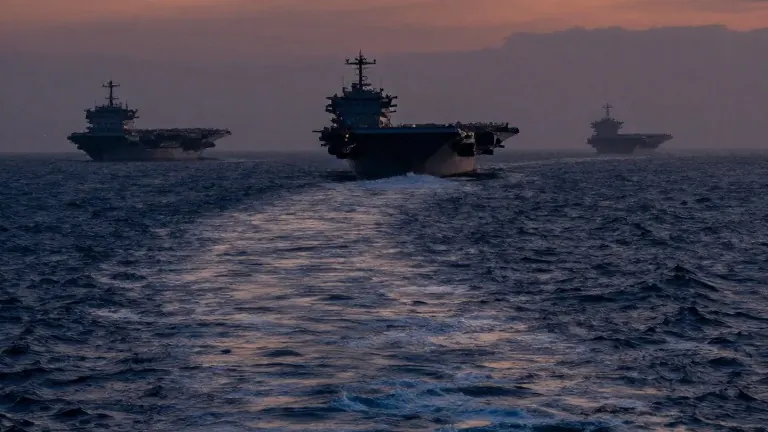
The president emphasized US readiness for immediate action. "We're ready for it. I've got three aircraft carriers here. The other one just arrived. We have three. They're fully locked and loaded," Trump said. He expressed a preference for avoiding the destruction of Iranian infrastructure, noting it would take 10 years to rebuild. "I don't like ripping down bridges. And the hardest thing to build is a bridge. It takes years, and I'm a good builder," he added.
Trump claimed Iran retains only 10 percent of its missile capacity and 15 percent of its drone capabilities. "The only thing they can do is about 10% level, make some missiles and make some drones. Drones at about 15% because much of their factories are gone," he said. He added that Iran wants a deal so badly. CNN did not specify the exact question regarding the potential offensive. Trump said the US has identified 38 bridges in Iran that could be knocked down in one hour if strikes resume.
Trump previously acknowledged that the war with Iran contributed to the Republican Party's defeat in the midterm vote held on Tuesday. The war, launched in late February by the United States and Israel, remains unpopular. Outright fighting has largely subsided, but the conflict continues through economic pressure and naval restrictions.
Iranian Foreign Minister Abbas Araghchi said on Sunday that mediators seeking a peace deal have not traveled since the "shock" of the US elections. "We now have to see how long it will take for them to digest these results, in order to determine how we are going to move forward," Araghchi told state TV. He noted that regional powers, including Qatar and Pakistan, have tried for months to halt the war without success.
Araghchi said it will take time for the atmosphere to become favorable for resuming mediator travel. He called for patience. On the social platform X, he posted that American voters have made their choice and it is time for the White House to do the same. He demanded Washington accept Iranian proposals or choose war. "Or choose war, and see our alert and battle-hardened Warriors rain down hell," Araghchi wrote.
In September, Iran proposed a seven-day plan to reopen the Strait of Hormuz. The demands included ending the war on all fronts, unfreezing assets, lifting oil sanctions, and ending the US counter-blockade of Iranian ports. Iran later shortened this timeline to two days. Araghchi repeated this two-day proposal on Sunday.
Iraq announced it reached understandings with the US to allow Iraqi oil exports through the Strait of Hormuz via a shipping lane near Oman. Iraqi Foreign Minister Fuad Hussein made the announcement in an interview with Al Jazeera. He did not provide details on the mechanism. Hussein said Iraq's losses from the war and export disruptions reached $60 billion. Iraqi oil exports rose to about 3.5 million barrels per day in October, up from 2.65 million barrels per day in September.
The Islamic Revolutionary Guard Corps said three noncompliant oil tankers caught fire and exploded in the Strait of Hormuz on Sunday. The statement said the vessels were sailing in an illegal channel. The Guards did not name the tankers or their nationalities. Iranian state television suggested explosions in southern Iran and on Qeshm Island the day before were related to Iranian military activities rather than US strikes. Officials had not confirmed missile strikes on Iranian territory following the blasts.
Both the US and Iran continue to strike vessels in the Strait of Hormuz. These actions restrict exports of energy and commodities vital to the global economy. Iran said two vessels hit mines and a third caught fire in the waterway. The US Navy maintains a counter-blockade of Iranian ports while Iran attempts to blockade the strait.