Trump Directs DOJ To Block Alaska Senate Certification
The federal government has filed the first post-Civil Rights era lawsuit to halt state election certification, citing a ballot confusion dispute in a close race.
By Alexei Brooks ·
Thirty-five million Americans have already cast ballots in the 2026 midterm elections, yet the legal fight to count them has begun before Tuesday arrives. The Department of Justice has filed a lawsuit demanding that federal courts hold up the certification of the U.S. Senate race in Alaska. This move marks the first time since the Civil Rights era that the federal government has sued to stop a state from certifying election results.
The administration’s actions this week represent a shift from the rhetorical complaints that defined Donald Trump’s previous term to concrete legal maneuvers. In October 2016, Trump claimed that Ted Cruz had stolen the Iowa caucuses. In 2020, his allies lost dozens of lawsuits attempting to overturn the presidential result. This week, however, the executive branch is directly intervening in state processes ahead of the vote.
The Alaska case centers on a dispute involving two candidates named Dan Sullivan. The Justice Department argues that voters may have been confused by the similar names on the ranked-choice voting ballot. The department wants a court to pause certification of a potential Democratic win until the agency determines if this confusion affected the outcome. Attorney General Todd Blanche told CNN on Sunday that the department had no choice but to act, stating, “We are not doing anything improper.”
President Trump followed the lawsuit with a call for the prosecution of Democratic candidate Mary Peltola. A New York Times report suggested her campaign helped recruit a challenger named Dan Sullivan to draw votes away from the Republican incumbent, also named Dan Sullivan. Trump also announced a $1 million bounty for proof of voter fraud, though details on how he would enforce the reward remain unclear.
Legal scholars describe the timing and scope of these actions as aggressive. Derek Muller, a law professor at Notre Dame, called the legal argument in the Alaska case “one of the worst ones I’ve ever seen.” He noted that the conduct appears impulsive rather than part of a long-term strategy. Theresa Lee, a senior attorney with the ACLU, said her group has been preparing for this scenario for at least eighteen months.
The administration is not limiting its legal pressure to Alaska. The Justice Department has sued California to block it from counting ballots, alleging the state had 20,000 noncitizens on its voter rolls. A similar demand was made against Washington regarding 400 voters. A federal judge rejected the California demands on Wednesday, ruling that the requests came too close to the election to fulfill. The department also seized election records from Georgia’s Fulton County related to the 2020 vote.
Republican leaders in Alaska have signaled mixed support for the federal intervention. Senator Lisa Murkowski said the administration “should never have filed” the suit. The state’s Republican-controlled government filed court papers to try to dismiss the case. Senator Dan Sullivan did not state whether he supported the lawsuit. These internal divisions contrast with the unified front Trump presented at recent rallies, where he described the Alaska voting system as a scam.
Institutional checks appear to be functioning so far. Courts have put on hold two executive orders from Trump that sought to change voting procedures. The administration has also lost more than two dozen cases seeking detailed voter information from states. Matt Dallek, a political historian at George Washington University, expects courts to throw out most of these charges. He argues the litigation serves to intensify the message to Trump’s supporters that the elections are rigged.
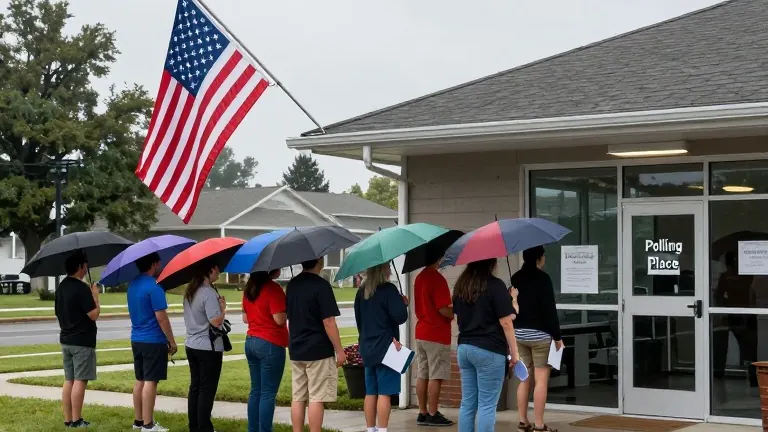
Election officials and opposition groups are monitoring the situation closely. They have pre-written lawsuits and plan to station tens of thousands of observers at polling places on Tuesday. Early voting has proceeded without notable disruption. Brendan Nyhan, a political scientist at Dartmouth College, warned that the primary risk is that the president might take actions that cannot be undone before courts can weigh in.
The next major legal deadline is the certification process in Alaska, which the Justice Department is asking judges to delay. The outcome of this case will determine if the federal government can pause the transfer of power in a close Senate race. The administration has indicated it will continue to litigate until the votes are tallied or a court rules otherwise.