Ten States Decide Control of the Nation's Executive Offices Today
Voters in ten key states cast ballots in gubernatorial races that will determine if Democrats regain a majority of state leadership for the first time in two decades.
By Alexei Brooks ·
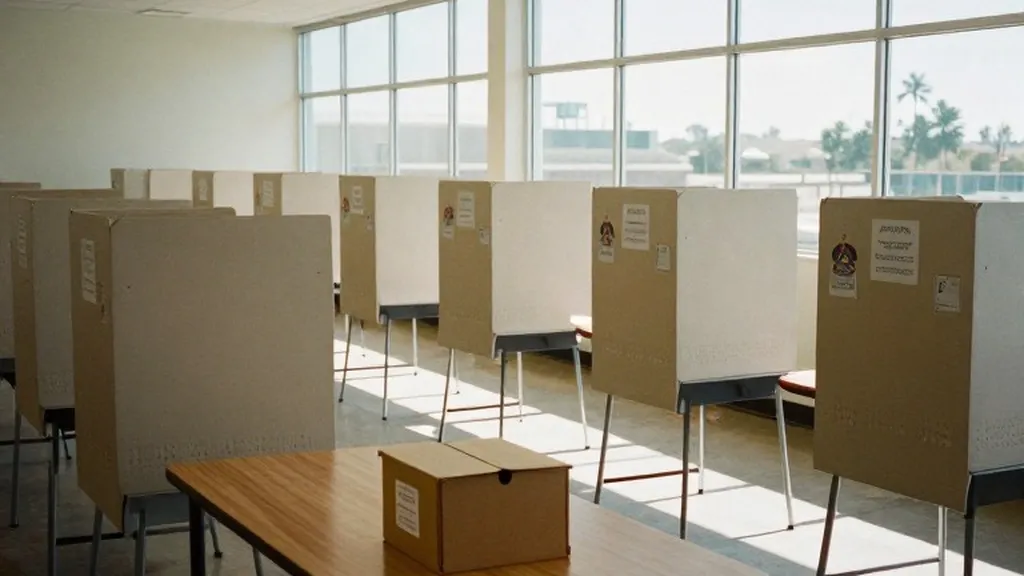
On this Election Day, voters in ten specific states are deciding the next occupants of the governor's mansion in a contest that extends beyond local policy to the national balance of power. These races include Georgia, Nevada, Ohio, Arizona, Pennsylvania, Wisconsin, Kansas, Michigan, New Hampshire, and Vermont. The outcome matters because Democrats currently hold 24 governorships while Republicans hold 26. To achieve a nationwide majority of executive offices, a feat they have not accomplished since 2010, Democrats need to secure a net gain of two governorships from the current tally.
In Georgia, the race pits Republican health care executive Rick Jackson against Democratic former Atlanta Mayor Keisha Lance Bottoms. This contest follows the term of incumbent Brian Kemp, who did not run for re-election. The state is a critical battleground because it is one of the five governorships held by Democrats in states that Donald Trump won in the 2024 presidential election. The Associated Press notes that the race is part of a broader fight for control of the Senate and House, where Georgia also has a competitive Senate race between Jon Ossoff and Mike Collins.
Nevada presents a different dynamic as Republican Governor Joe Lombardo faces Democratic Attorney General Aaron Ford. The state uses a largely mail-based voting system, with polls open from 7 a.m. To 7 p.m. Local time. Nevada is considered a key swing state in this midterm cycle. The Associated Press identifies the governor's race as a significant contest where the outcome could influence the state's political direction in the final two years of the current presidential term. The candidate on the ballot represents a challenge to the incumbent party in a state that has historically leaned toward the center in recent cycles.
Ohio is another focal point for the governor's race, featuring Republican Vivek Ramaswamy against Democrat Amy Acton. Ramaswamy's campaign faced backlash over an advertisement featuring Acton's estranged mother, a detail that has drawn national attention to the campaign dynamics. Ohio is also hosting a special Senate election for the seat of JD Vance, adding to the high stakes of the day. The state uses a new congressional map for this election, which may affect how voters align with candidates across different offices on the ballot.
In Arizona, Democrats are defending the governorship held by Katie Hobbs in a state that Trump won in 2024. This is one of the five states where Democrats hold the executive office despite losing the presidential vote two years prior. The Associated Press lists Arizona as a key battleground alongside Kansas, Michigan, Pennsylvania, and Wisconsin. These states are crucial because they represent the core of the Democratic strategy to hold onto existing governorships while attempting to flip Republican-held offices in other regions.
Pennsylvania features Josh Shapiro, the current Democratic governor, who is running for re-election. The state is one of the six using new congressional maps following mid-decade redistricting, a factor that complicates the electoral landscape. The Associated Press notes that the governor's race in Pennsylvania is part of a broader set of competitive contests that could determine which party controls the state's executive branch for the next four years. Voters in the state are weighing local issues against the national referendum on the current administration's performance.
Wisconsin sees a contest following the decision by incumbent Tony Evers not to run for re-election. The state is one of the five where Democrats defend a governorship in a Trump-won state. The Associated Press highlights Wisconsin as a key race in the Midwest, where voters are making decisions that will influence the balance of power in Congress. The absence of an incumbent in the race adds a layer of uncertainty, as candidates must establish their own bases of support without the benefit of name recognition tied to the previous administration.
Kansas, typically a reliable Republican state, has become central to the fight for Senate control and the governor's office. The Associated Press notes that the state's political landscape has shifted in recent years, making it a more competitive environment for both parties. The governor's race in Kansas is part of a broader set of contests in the region that could impact the national majority. Voters in the state are considering the impact of national economic policies on their local cost of living, a theme that resonates with many candidates across the country.
Michigan presents a challenge for Democrats as they defend the governorship in a state that Trump won by a narrow margin in 2024. The Associated Press identifies Michigan as a key battleground, with the governor's race drawing significant attention from national parties. The state is also using a new congressional map, which may affect how voters align with candidates in different districts. The outcome of the governor's race in Michigan could influence the state's political trajectory in the final two years of the current presidential term.
New Hampshire and Vermont offer contrasting scenarios for the governor's race. In New Hampshire, Republican Kelly Ayotte is defending her seat in a state that Kamala Harris won in 2024. In Vermont, Republican Phil Scott is also running for re-election in a state that Harris won. The Associated Press notes that these races are part of a broader set of contests in the Northeast where Republicans are defending governorships in states that leaned Democratic in the previous presidential election. The outcome of these races will determine if Republicans can maintain their hold on executive offices in these key states.